AI TRiSM (Trust, Risk, and Security Management)

Introduction
AI TRiSM — short for Trust, Risk, and Security Management — has become one of the most important frameworks for responsible AI adoption in 2026. As organisations deploy AI at scale, ensuring these systems are trustworthy, secure, and low-risk is no longer optional.
Gartner introduced AI TRiSM as a key strategic priority to help businesses govern AI effectively while maximising value and minimising dangers.
In this guide, we explain what AI TRiSM is, why it matters, its core components, and how your organisation can implement it successfully.
What is AI TRiSM?
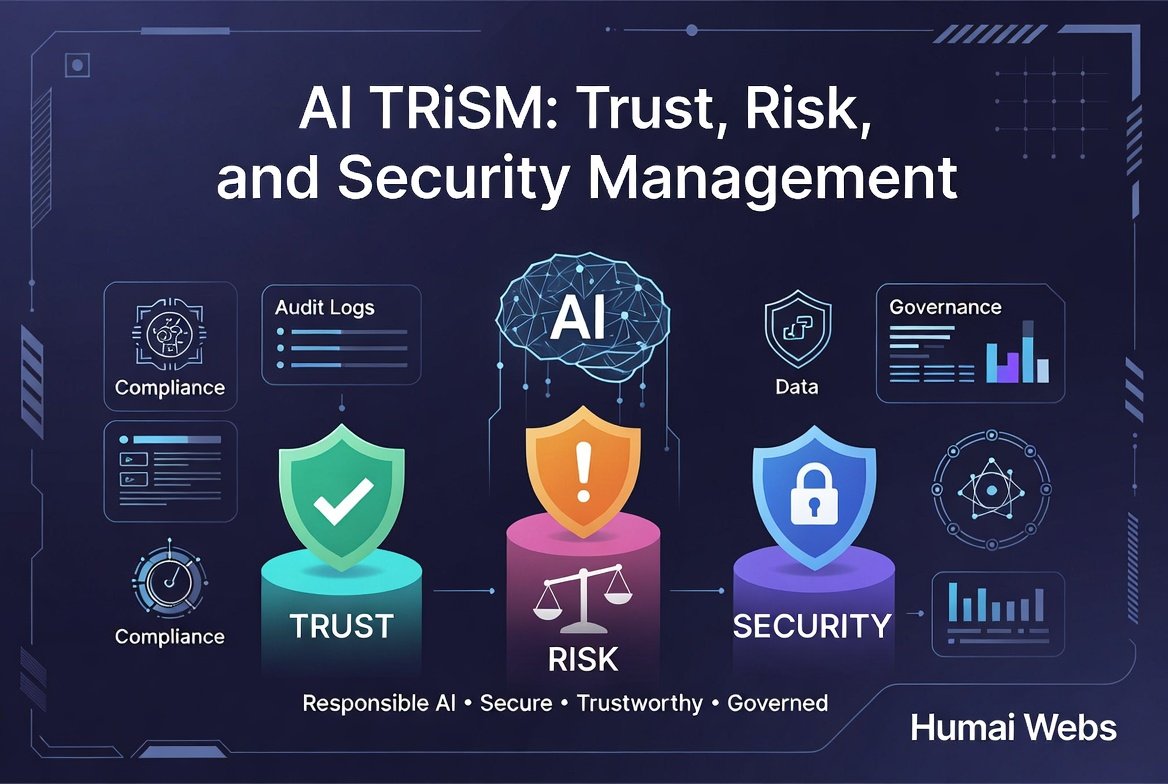
AI TRiSM is a comprehensive governance framework that focuses on three pillars: Trust, Risk, and Security in AI systems. It provides structured approaches to ensure AI solutions are ethical, reliable, transparent, and protected from threats.
Why AI TRiSM is Critical in 2026
Rising AI regulations (EU AI Act, UK AI Principles, etc.)
Increasing AI-related security breaches
Growing public concern about AI bias and ethics
Need for accountability in high-stakes AI decisions
Competitive advantage through responsible AI
The Three Pillars of AI TRiSM
1. Trust (Trustworthiness)
Explainability and transparency
Fairness and bias mitigation
Ethical AI practices
Human oversight and accountability
2. Risk Management
Identifying AI-specific risks
Continuous monitoring and evaluation
Scenario planning for AI failures
Compliance with regulations
3. Security Management
Protection against adversarial attacks
Data privacy and confidentiality
Model security and integrity
Secure AI supply chain management
How to Implement AI TRiSM in Your Organisation
Establish AI Governance Committee
Define Clear Policies and Standards
Choose AI TRiSM-Ready Tools and Platforms
Implement Continuous Monitoring
Train Teams on Responsible AI
Conduct Regular Audits and Assessments
AI TRiSM vs Traditional IT Security
While traditional security focuses on systems and data, AI TRiSM addresses unique challenges like model poisoning, data drift, bias amplification, and explainability.
Benefits of Strong AI TRiSM
Reduced regulatory fines
Higher stakeholder trust
Better AI performance and reliability
Competitive differentiation
Lower long-term operational risks
FAQ Section
What does AI TRiSM stand for?
AI TRiSM stands for Trust, Risk, and Security Management — a framework for governing AI responsibly.
Why is AI TRiSM important in 2026?
With stricter regulations and rising AI risks, organisations need structured approaches to manage trust, risk, and security effectively.
Who should be responsible for AI TRiSM?
It requires collaboration between AI teams, security, legal, compliance, and business leaders.
Is AI TRiSM only for large enterprises?
No. Small and medium businesses using AI should also adopt basic AI TRiSM principles to manage risks.
What tools help with AI TRiSM?
Platforms like Microsoft Purview, IBM Watson, Credo AI, and specialised governance tools support AI TRiSM implementation.
11. Conclusion with CTA
AI TRiSM is no longer a nice-to-have — it is essential for any organisation serious about using AI responsibly and sustainably in 2026 and beyond. Companies that master Trust, Risk, and Security Management will build stronger, more resilient AI systems that stakeholders can truly trust.
The future of AI belongs to those who can balance innovation with responsibility.
Need help implementing AI TRiSM in your organisation?
The team at Humai Webs helps UK and global businesses build responsible, secure, and trustworthy AI strategies.
Contact us today for a consultation on AI governance and AI TRiSM implementation.
Visit: Humai Webs