Beyond DevOps: Why Platform Engineering Is the New Standard for Developer Velocity

Introduction
Platform Engineering is rapidly emerging as the next evolution beyond traditional DevOps. While DevOps brought development and operations closer, Platform Engineering takes it further by building internal developer platforms that empower teams to ship software faster with less friction.
In 2026, organisations adopting platform engineering are seeing dramatic improvements in developer productivity and business agility.
This guide explains what platform engineering is, why it’s surpassing DevOps, and how your organisation can benefit from it
The Limitations of Traditional DevOps
DevOps solved many problems but created new ones — developers now spend too much time on infrastructure, tooling, and repetitive tasks. Cognitive load has increased, leading to burnout and slower delivery.
What is Platform Engineering?
Platform Engineering is the discipline of designing and building internal developer platforms (IDPs) that provide self-service capabilities, golden paths, and automated tooling. It treats the platform as a product built for internal developers.
Why Platform Engineering Is the New Standard in 2026
1. Higher Developer Velocity
Developers can deploy code, provision environments, and ship features in minutes instead of days or weeks.
2. Reduced Cognitive Load
Engineers focus on business logic instead of wrestling with infrastructure and tooling.
3. Improved Consistency and Security
Golden paths and paved roads ensure best practices, compliance, and security are built-in.
4. Better Developer Experience (DevEx)
Self-service portals, standardised tooling, and excellent documentation lead to happier, more productive teams.
5. Scalable Software Delivery
Platforms allow organisations to scale from tens to hundreds of engineering teams without chaos.
Key Components of a Successful Internal Developer Platform
Self-service infrastructure provisioning
CI/CD pipelines as a service
Environment management
Observability and monitoring tools
Security and compliance guardrails
Developer portals and documentation
Golden paths for common use cases
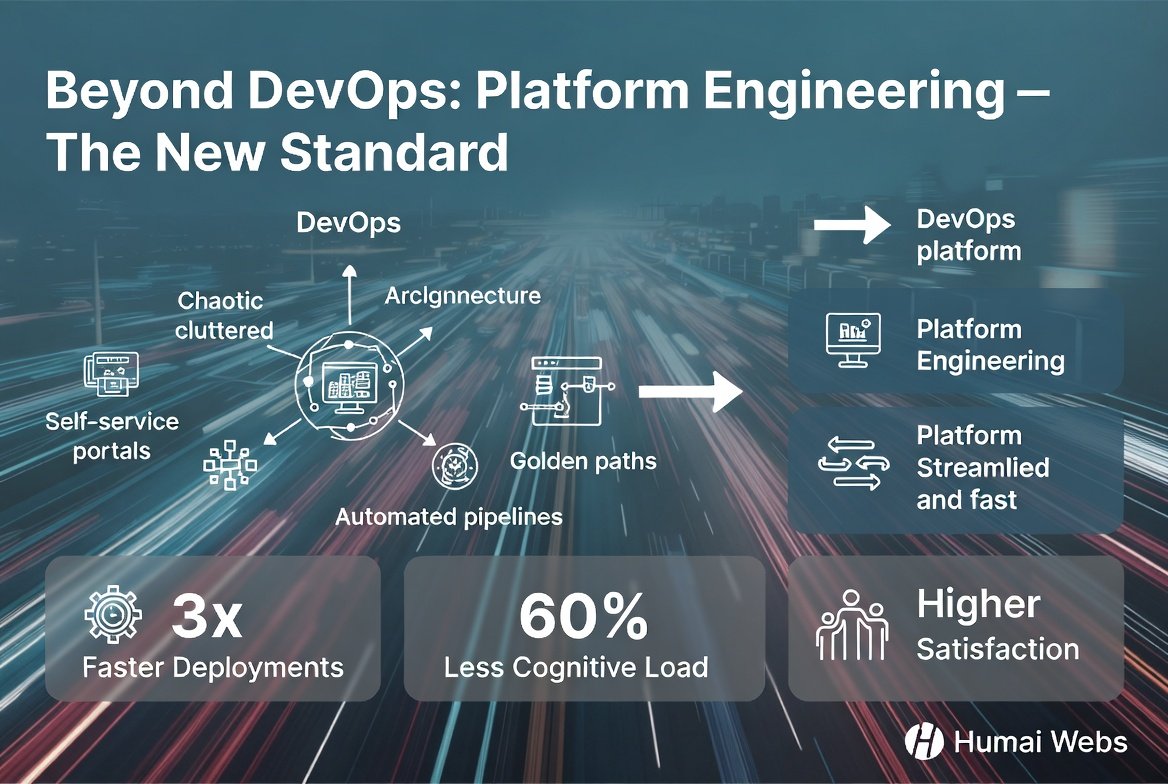
Platform Engineering vs DevOps
DevOps is a culture and set of practices. Platform Engineering is the next step — it builds concrete platforms that embed DevOps principles and make them accessible at scale.
Real Results from Platform Engineering
Leading companies report:
40-60% reduction in time spent on infrastructure tasks
2-3x faster deployment frequency
Significant improvement in developer satisfaction scores
FAQ Section
What is Platform Engineering?
The practice of building internal developer platforms that provide self-service tools and golden paths to accelerate software delivery.
Is Platform Engineering replacing DevOps?
No. It builds upon DevOps by creating platforms that make DevOps practices scalable and developer-friendly.
Who should own Platform Engineering?
A dedicated platform team (often called Platform Team or Enablement Team) that treats the platform as a product.
How long does it take to implement Platform Engineering?
Most organisations see initial value in 3-6 months, with full maturity taking 12-18 months.
Is Platform Engineering only for large enterprises?
No. Even mid-sized companies can benefit by starting with a focused internal developer platform.
11. Conclusion with CTA
Platform Engineering represents the next maturity level beyond DevOps. By investing in great internal platforms, organisations can dramatically boost developer velocity, improve developer experience, and deliver business value faster.
The companies that treat their developer platform as a strategic product will lead their industries in speed and innovation.
Ready to move beyond DevOps and embrace Platform Engineering?
The team at Humai Webs helps UK enterprises design and implement high-impact internal developer platforms that drive real developer velocity.
Contact us today for a free consultation and discover how Platform Engineering can transform your engineering organisation.
Visit: humai Webs