The Hallucination Guard: Why Human-in-the-Loop Is Vital for High-Stakes AI Applications

What Are AI Hallucinations and Why Do They Happen?
AI hallucinations occur when generative models create plausible but incorrect or fabricated information. These are not random glitches—they stem from how large language models predict patterns in training data.
Models prioritize fluent responses over factual accuracy. In high-stakes scenarios, even a small hallucination rate becomes dangerous. Recent benchmarks show hallucination rates varying widely, sometimes exceeding 10-30% on complex tasks.
Common triggers include:
Insufficient or biased training data
Ambiguous prompts
Overconfidence in generation
Lack of real-time verification
Without safeguards, these issues can damage reputations, finances, and lives.
Understanding Human in the Loop AI (HITL)
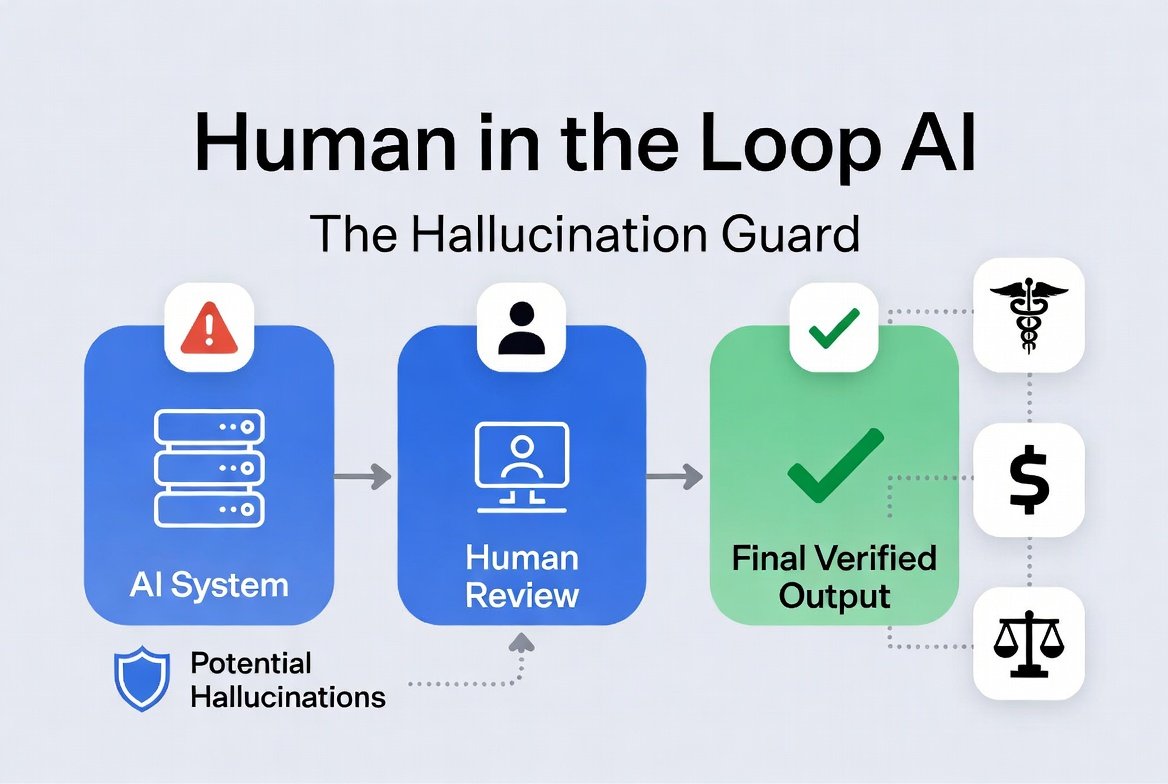
Human in the loop AI integrates human expertise at key points in the AI workflow. Humans review, validate, correct, or override AI outputs before final use.
There are different levels:
Human-in-the-loop: Humans actively participate in training or decision-making.
Human-on-the-loop: Humans supervise and intervene when needed.
Human-over-the-loop: Humans set rules and monitor high-level outcomes.
This hybrid model leverages AI strengths (speed and scale) while using human strengths (context, ethics, and judgment).
Why Human in the Loop AI Is Critical for High-Stakes Applications
In regulated industries, full automation carries unacceptable risks. Human in the loop AI serves as the hallucination guard by adding accountability and precision.
Key benefits include:
Higher accuracy: Humans catch subtle errors AI misses.
Regulatory compliance: Many frameworks like the EU AI Act require human oversight for high-risk systems.
Reduced bias and ethical risks: Humans ensure fairness and alignment with values.
Continuous improvement: Feedback from humans refines models over time.
Building user trust: Transparent processes increase adoption.
Studies show hybrid systems achieve significantly higher accuracy than AI or humans alone in domains like healthcare diagnostics.
Real-World Examples of Human in the Loop AI Success
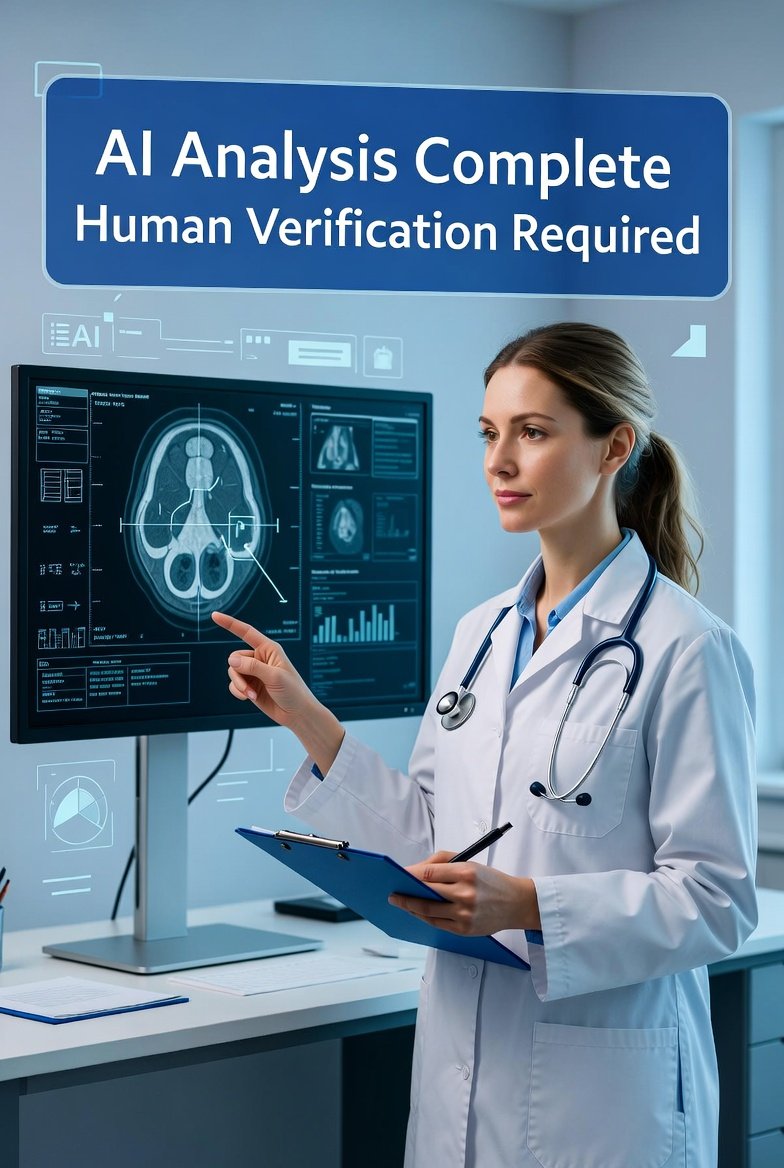
Healthcare: AI analyzes medical images for anomalies, but radiologists provide final verification. This reduces misdiagnosis risks while speeding up workflows.
Finance: Banks use AI for fraud detection and document review. Human experts approve high-value transactions or complex reports, preventing costly errors.
Legal: Tools like J.P. Morgan’s COIN system review contracts rapidly, with lawyers verifying critical outputs.
Content Moderation: Platforms flag suspicious content for human review, improving accuracy and reducing false positives.
These examples prove human in the loop AI delivers both efficiency and safety.
How to Implement Human in the Loop AI Effectively
Start with these practical steps:
Identify high-risk decision points in your workflows.
Design clear review interfaces that minimize reviewer fatigue.
Train humans on AI limitations and hallucination red flags.
Use feedback loops to retrain models with corrections.
Set confidence thresholds—route low-confidence outputs to humans automatically.
Monitor performance metrics like error rates and review times.
Tools like RAG (Retrieval-Augmented Generation) combined with HITL further ground AI in verified data.
Challenges and Best Practices for Human in the Loop AI
Common challenges include reviewer fatigue, scalability, and integration costs. Address them by:
Rotating review teams
Using AI to pre-filter easy cases
Investing in user-friendly interfaces
Measuring ROI through reduced errors and compliance savings
Best practices emphasize transparency, clear accountability, and ongoing training.
The Future of Human in the Loop AI
As AI capabilities grow, human oversight will evolve rather than disappear. Expect more sophisticated collaboration tools, better explainability, and adaptive systems that learn from human input at scale.
Human in the loop AI will remain the gold standard for responsible AI deployment in high-stakes environments.
Best Practices for Reducing Hallucinations with Human Oversight
Always cross-verify outputs against trusted sources. Use structured prompts and implement multi-stage reviews for critical applications.
Key Metrics to Track in Human in the Loop AI Systems
Monitor hallucination detection rate, review time per case, model improvement over iterations, and overall accuracy gains.
ntext-specific errors, biases, and fabrications that models miss. This is vital for high-stakes applications where accuracy affects real outcomes.
In which industries is human in the loop AI most important?
It is essential in healthcare, finance, legal services, autonomous systems, and cybersecurity—anywhere errors can cause significant harm.
How does human in the loop AI improve model performance over time?
Human corrections provide high-quality feedback data. This retrains models, reducing future hallucination rates and improving reliability.
Can small businesses implement human in the loop AI?
Yes. Start small with key workflows, use affordable tools, and scale as needed. Even basic review processes deliver strong results.
Conclusion with CTA
Human in the loop AI is not a temporary fix—it is the foundation for trustworthy, high-stakes AI deployment. By acting as the hallucination guard, it protects your organization while unlocking AI’s full potential safely.
Ready to build more reliable AI systems for your business? Contact the team at Humai Webs today. Our experts help integrate smart human-in-the-loop solutions tailored to your needs.
Visit humaiwebs or reach out for a consultation. Let’s make AI work responsibly for you.